Ever wonder how businesses seem to always show up at the right time in your inbox? Whether it’s a timely discount, a helpful tip, or a gentle reminder, these messages often feel perfectly timed. This isn’t mere coincidence,it’s the result of strategic email sequencing and in this post “What Is an Email Sequence (The Ultimate Beginner’s Guide)” you’ll learn exactly how it happens.
Email sequences are a core strategy in modern digital marketing. They allow businesses to send a series of automated, well-timed, and personalized messages that build trust, guide customer journeys, and ultimately drive conversions.
If you’re new to email marketing or looking to improve your results, understanding what an email sequence is and how to use it effectively can help you boost engagement, increase sales, and strengthen long-term customer relationships.
What Is an Email Sequence?
Imagine walking into a store where you’re warmly welcomed, offered helpful guidance, and then recommended a product that perfectly suits your needs. That experience didn’t happen by chance it was carefully designed to lead you from curiosity to confidence.
That’s exactly what an automated email sequence does in the digital world. An email sequence is a series of pre-written, automated emails sent to subscribers over time based on specific actions (like signing up for a newsletter) or on a set schedule. It’s designed to guide your audience through a journey from getting to know your brand to taking meaningful actions, like making a purchase or booking a call.
Unlike one-off email blasts that can feel random or out of context, email sequences are structured and strategic. Each email builds on the last, delivering timely, relevant content that helps foster trust, engagement, and ultimately, conversion.
For example, when someone subscribes to your list, a welcome sequence can greet them, share your brand story, highlight key offerings, and even deliver a helpful freebie. As the sequence continues, you can nurture the relationship further with educational content, customer stories, or exclusive promotions all without lifting a finger each time.
What is an Automated Email Sequence?
An automated email sequence means that once you set it up, write the emails and define when they should be sent, the system takes care of the rest. Whether someone subscribes today or three weeks from now, they’ll receive the right message at the right time, every time all thanks to an automated email sequence set up through a tool like ValleueMail.
Why Automation Is a Game-Changer
- Save Time & Work Smarter: No more manually sending follow-up emails. Automation handles communication on autopilot, freeing you up to focus on other parts of your business.
- Consistent Brand Voice: Pre-writing your emails ensures every subscriber gets the same polished, on-brand experience — no matter when they join.
- More Leads, More Conversions: By showing up consistently and providing value, automated email sequences gently guide subscribers toward taking action. In fact, research from SmartBlogger shows that automated campaigns can achieve a 70.5% higher open rate and a 152% higher click-through rate compared to traditional one-off campaigns.
Think of an automated email sequences as your digital concierge, greeting your subscribers, answering their questions, and offering the right solutions at the right time. And with automation, that concierge works 24/7. When done right, email sequences don’t just save you time, they build relationships, deliver value, and convert curious visitors into loyal customers.
How an Automated Email Sequence Strengthens Your Business
- Build Stronger Customer Relationships Automatically: Email sequences enable businesses to nurture relationships with their audience by delivering timely, relevant content that addresses their needs and interests. By setting up an automated email sequence, you ensure consistent communication that keeps your brand top-of-mind, fostering trust and loyalty over time.
- Save Time Compared to Manual Emailing: Manually sending individual emails to each subscriber is time-consuming and prone to inconsistencies. Automated email sequences streamline this process, allowing you to set up campaigns that run on autopilot. This not only saves valuable time but also ensures that every subscriber receives the right message at the right moment.
- Personalization at Scale: With automated email sequences, you can deliver personalized content to a large audience without sacrificing relevance. By leveraging subscriber data such as behavior, preferences, and demographics, you can tailor messages that resonate with each individual, enhancing engagement and conversion rates.
Types of Email Sequences You Should Know
Email sequences are versatile tools that cater to various stages of the customer journey. Implementing the right sequence at the right time can significantly enhance engagement, conversions, and customer loyalty. Let’s explore some essential types:
1. Welcome Sequence
Purpose: To greet new subscribers and introduce them to your brand. This sequence sets the tone for your relationship, making subscribers feel valued from the outset.
Example:
- Email 1: A warm welcome message thanking the subscriber for joining.
- Email 2: An overview of your brand’s mission and values.
- Email 3: Highlighting popular products or services with links to learn more
2. Nurture Sequence
Purpose: To build trust and guide leads toward a purchase decision. By delivering consistent value, you position your brand as a helpful authority in your field.
Example:
- Email 1: Share a valuable blog post or resource relevant to the subscriber’s interests.
- Email 2: Provide a case study showcasing how your product/service solved a problem.
- Email 3: Offer a free trial or demo to encourage hands-on experience
3. Sales Sequence
Purpose: To convert engaged leads into paying customers. This sequence leverages social proof and urgency to drive conversions.
Example:
- Email 1: Introduce a limited-time offer or discount.
- Email 2: Highlight customer testimonials and success stories.
- Email 3: Create urgency with a reminder of the offer’s expiration.
5. Re-engagement Sequence
Purpose: To rekindle interest from inactive subscribers. Re-engagement campaigns can help maintain a healthy and active subscriber list.
Example:
- Email 1: Acknowledge the subscriber’s absence and express that they’re missed.
- Email 2: Share new offerings or updates they might have missed.
- Email 3: Present an exclusive offer to encourage renewed engagement
How to Create an Email Sequence (Fast and Easy with ValleueMail)
Crafting an effective email sequence doesn’t have to be daunting. With ValleueMail, you can set up automated, personalized email campaigns that engage your audience and drive conversions. Here’s a step-by-step guide to get you started:
Step 1: Plan Your Goal
Begin by defining the objective of your email sequence. Are you welcoming new subscribers, nurturing leads, promoting a product, or re-engaging inactive customers? Having a clear goal will shape the content and structure of your sequence.
Step 2: Map the Customer Journey
Outline the path you want your subscribers to follow. Consider the stages they go through, from initial awareness to taking action. Determine what information or encouragement they need at each stage to move forward.
Step 3: Write Your Emails
Craft a series of emails that align with each stage of the customer journey. Ensure each email provides value, maintains a consistent brand voice, and includes a clear call-to-action (CTA). Personalize the content to resonate with your audience’s interests and needs.
Step 4: Set Up Automation in ValleueMail
- Sign up or Log in to your ValleueMail dashboard
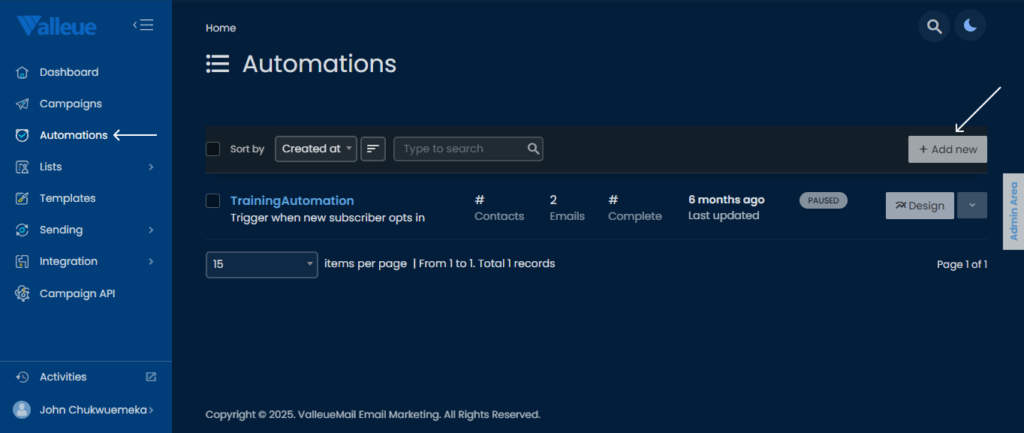
- Go to the “Automation” section from the left-hand menu.
- Click “Add New” to start building your sequence as seen in the image below
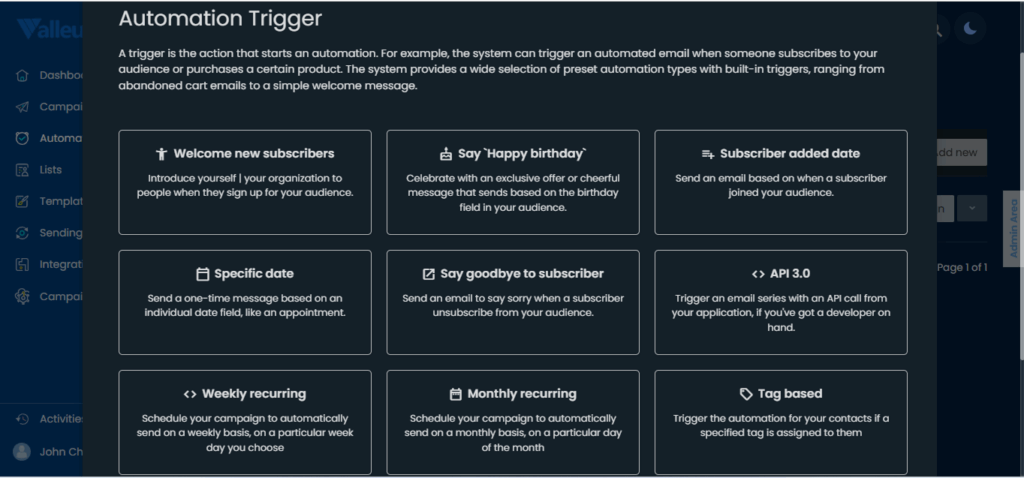
4. Choose a trigger for your sequence and select a list for the campaign then click on the confirm button
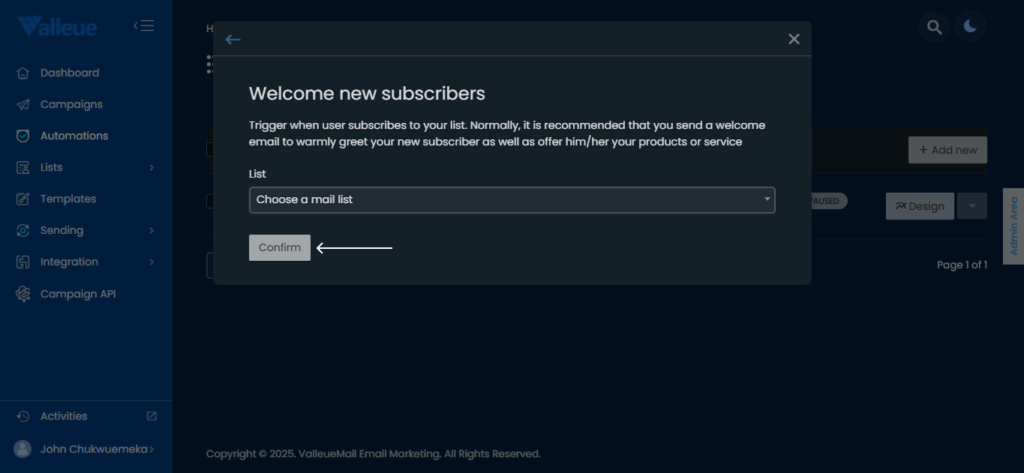
5. Give your automation a name, this name will be used to identify the automation later.
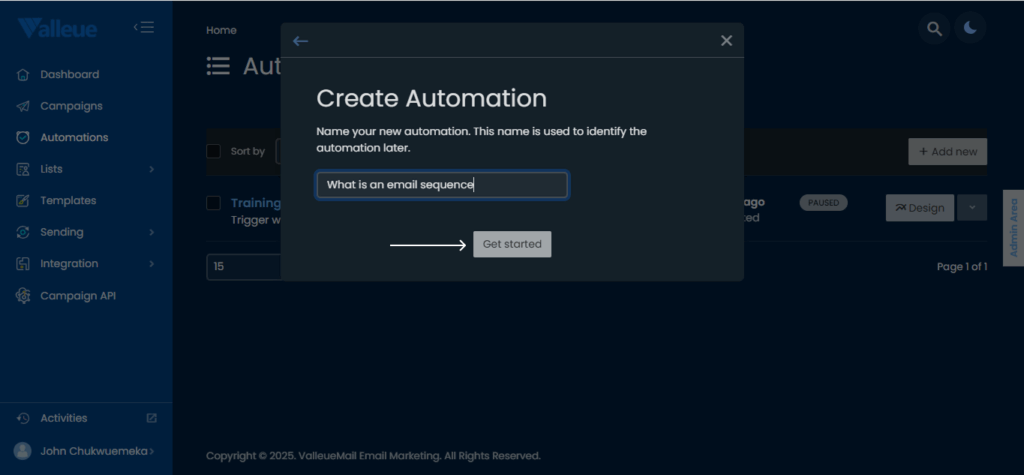
6. After naming your automation, click “Get Started”
7. Begin building your sequence flow by clicking on the plus sign
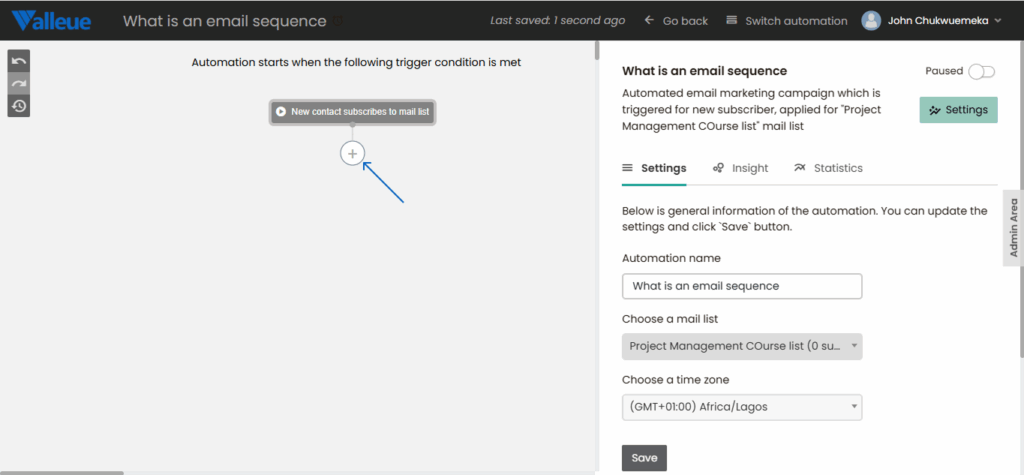
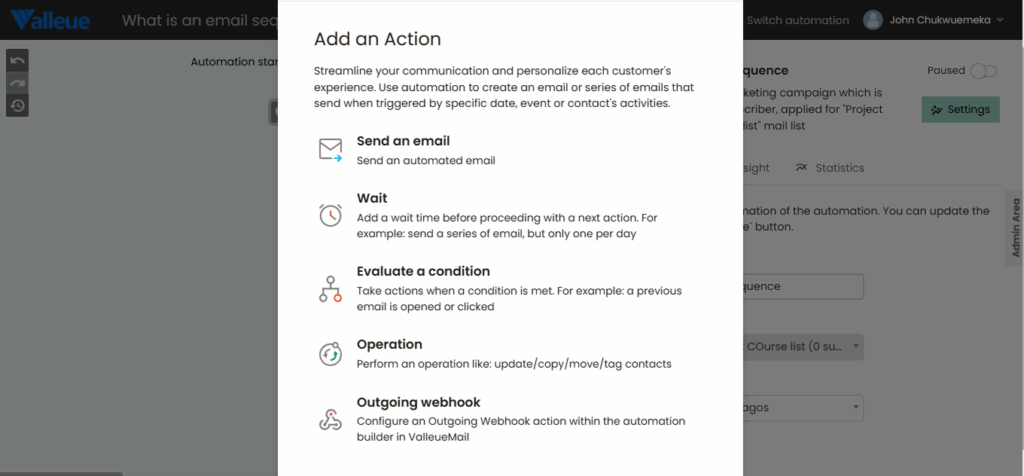
8. Add actions like “Send Email,” “Wait X days,” or “If conditions”. Schedule delays between steps (e.g., Day 1 welcome, Day 3 product intro).
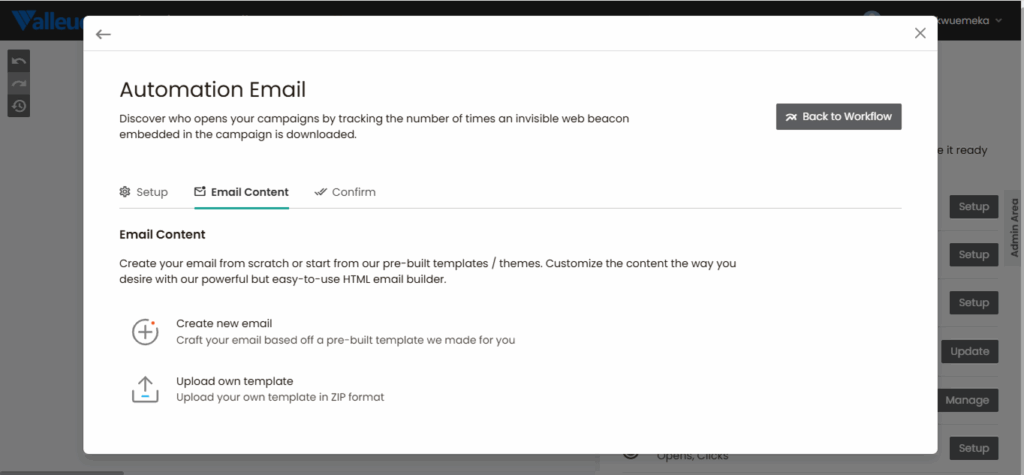
9. For each “Send Email” step, attach one of your pre-written emails.
10. Once finished, turn on the toggle at the top right corner to launch your automation.
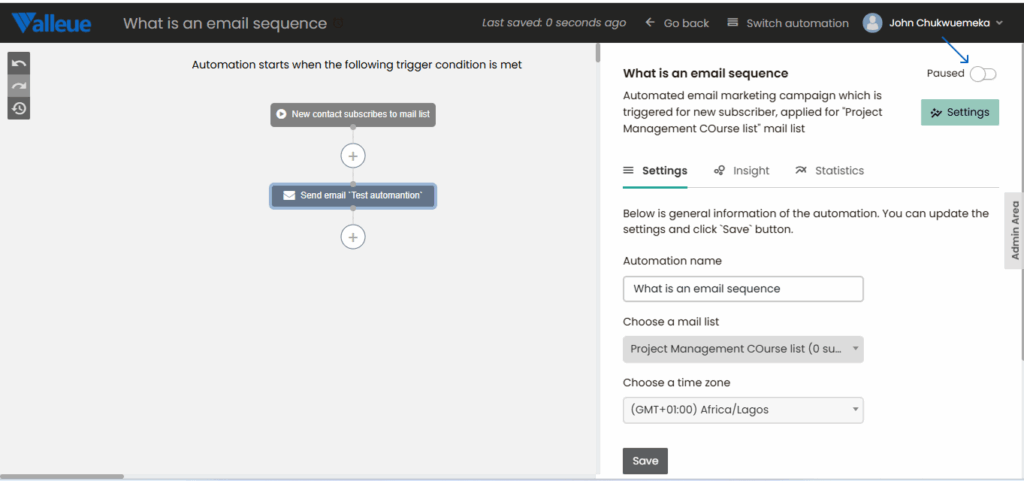
With ValleueMail, you can visualize the entire workflow and track performance in real time making it easy to tweak and optimize later.
Step 5: Test and Optimize
Before launching your sequence, test it to ensure everything functions as intended. Check for typos, broken links, and proper personalization.
Ready to create your first sequence? Try ValleueMail free today and get started in minutes!
Email Sequence Best Practices to Maximize Your Results
Crafting an effective email sequence goes beyond automation; it requires thoughtful strategy to ensure each message resonates with your audience. Here are key best practices to enhance engagement and drive conversions:
1. Keep It Conversational, Not Robotic
Your emails should read as if they’re written by a real person who understands the recipient’s needs. Avoid overly formal language or stiff templated phrasing. Before deploying a sequence, read the emails aloud do they sound like something you would want to read, or like a robot wrote them? A personal, conversational tone will prevent your emails from feeling like automated spam.
2. Personalize Where Possible (Names, Actions)
Personalization enhances relevance and engagement. Use the recipient’s name naturally, refer to their company or industry, and perhaps mention a relatable observation. Incorporating such details shows you understand their specific needs and interests.
3. Space Emails Thoughtfully (Not Daily Unless Appropriate)
Bombarding your audience with daily emails can lead to fatigue and unsubscribes. Space out your emails strategically to avoid overwhelming recipients. Experiment with different intervals to find the sweet spot for your audience.
4. Always Have ONE Clear Action in Every Email
Each email should have a single, clear call to action (CTA) that guides the recipient toward the desired outcome. Whether it’s clicking a link, downloading a resource, or scheduling a demo, make sure your emails have a defined purpose.
Conclusion
Email sequences are a powerful tool in your marketing arsenal. They enable you to:
- Enhance customer engagement: By delivering timely, relevant content, you keep your audience connected and interested in your brand.
- Increase conversions: Structured sequences guide potential customers through the buyer’s journey, addressing their needs and encouraging them to take action
- Save time through automation: Once set up, email sequences run on autopilot, allowing you to focus on other aspects of your business.
Remember, your first sequence doesn’t have to be perfect, it just needs to be started. Taking that initial step is crucial to unlocking the benefits of automated email marketing.
Ready to create your first sequence? Let ValleueMail help you launch beautiful, high-converting email sequences today. Start for FREE